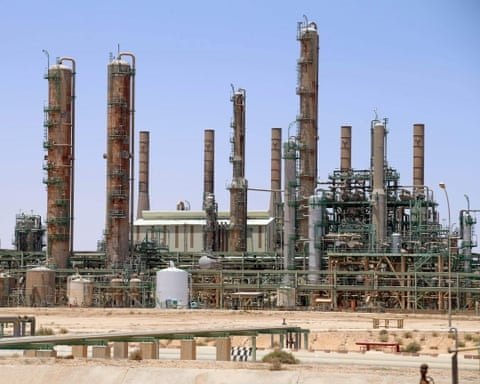
A sophisticated, state-backed fuel smuggling operation has drained an estimated $20 billion from Libya’s national revenue over a three-year period, according to a new investigation. The findings point to a systematic scheme where the country’s primary income source was deliberately exploited.
The report details how officials and security leaders, ostensibly tasked with public service, instead orchestrated a massive illegal enterprise. This operation has not only impoverished the Libyan state but has also reportedly supplied fuel to conflict zones, including Sudan, thereby prolonging regional instability.
Investigators are calling for an internationally-supported probe into the oil officials at the center of the scheme. They urge global assistance to help Libyan authorities identify and hold accountable those responsible for diverting public funds.
While fuel smuggling has long been a challenge in Libya, the scale of the problem escalated dramatically after 2022. This surge coincided with a change in leadership at the National Oil Corporation (NOC), a key institution that operates across the country’s political divisions. The NOC implemented a system that exchanged domestically produced crude oil for imported, refined fuel. Instead of being sold at subsidized prices within Libya, this imported fuel was illicitly resold on international markets for enormous private profit.
By late 2024, the NOC’s fuel imports had doubled compared to early 2021 levels. Analysts note that this increase far exceeded any plausible growth in domestic demand, indicating that a significant portion—more than half, according to the report—was being diverted. In 2024 alone, the value of smuggled fuel is estimated to have surpassed $6.7 billion, a sum that could have more than tripled national spending on critical sectors like healthcare and education.
The operation is described as a highly organized effort involving corrupt officials and criminal networks that control key logistical points, distribution hubs, and border crossings. Smuggled fuel was transported via tanker trucks, vessels, and other means to destinations across Africa and Europe. This illicit export has caused domestic fuel shortages, forcing ordinary Libyans to pay inflated prices on the black market.
The former chairman of the NOC, who led the corporation during this period of surging imports, has defended his tenure, stating that the institution maintained transparency and proposed reforms to reduce dependency on subsidized fuels. The NOC has since reported abandoning the swap system, with recent data showing a decrease in fuel import quality. However, experts contend that Libya continues to import volumes of refined fuel that vastly exceed its domestic needs.