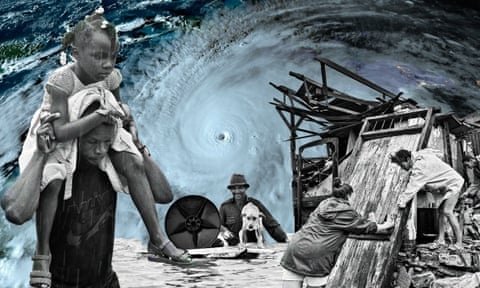
A week after a record-breaking hurricane tore through the Caribbean, communities are confronting devastation on an almost unimaginable scale. The storm, noted for its exceptional power and slow approach, has left a trail of destruction, severely testing the region’s resilience.
The impact on the ground is profound. In one of the hardest-hit areas, entire landscapes have been transformed. Roads have vanished under landslides and floodwaters, with some routes now impassable. The structural damage is near-total, with many buildings either heavily damaged or completely erased from their foundations. Long-time residents report that familiar landmarks, from shops to restaurants, have disappeared without a trace, leaving behind no evidence they ever existed.
The psychological toll of the storm’s approach was immense. With an unusually long buildup, the dread and anticipation created an atmosphere of helplessness. The question of how to prepare for an event of such magnitude left many feeling entirely at nature’s mercy. This anxiety was met with a characteristically resilient response, including a wave of dark humor on social media as a means of coping with the impending crisis.
Beyond the immediate physical destruction, the storm has inflicted deep wounds on the collective psyche. The loss of life represents a profound tragedy for small populations, while the widespread elimination of livelihoods and shelter presents a monumental challenge to sustaining hope. The recurring nature of such climate disasters compounds the trauma, with some communities facing this level of devastation for the second time in just over a year, having only recently finished rebuilding from a previous hurricane.
Scientific analysis points to a direct connection between the storm’s ferocity and broader climate patterns. The warming of ocean waters is cited as a key factor, intensifying what would otherwise have been a less powerful weather system. This has fueled a growing sentiment across the region that the consequences of global emissions, for which the Caribbean bears minimal responsibility, are being disproportionately felt on its shores. This has strengthened calls for industrialized nations, whose historical emissions have driven climate change, to contribute significantly to reconstruction and support efforts. Some advocates are now explicitly linking climate justice to broader historical reparations, arguing that the industrial prosperity that accelerated climate change was itself built on foundational injustices.
The path forward involves a colossal effort to rebuild, often from the ground up. The diaspora is mobilizing in a major way, organizing fundraising concerts internationally to channel aid back home. Simultaneously, local celebrities have launched their own campaigns to support recovery.
Looking ahead, the central question is one of fortification. With the hurricane season a recurring annual threat, there is a widespread and urgent focus on how to future-proof communities. The burden of ensuring safety in the coming years weighs heavily on a region that must now live with the constant reality of climate precariousness.